
News
Lac Hong University hosts “Artificial Intelligence Pedagogy — Applying Artificial Intelligence in Teaching”
On August 4 and 6, 2026, Lac Hong University (LHU) held the “Artificial Intelligence Pedagogy — Applying Artificial Intelligence in Teaching” course in Room D305 at Campus 2. The course formed part of the University’s professional development programme for teaching staff, with a focus on strengthening digital pedagogical competencies, advancing innovative teaching practices, and responding to the growing demands of digital transformation in higher education.
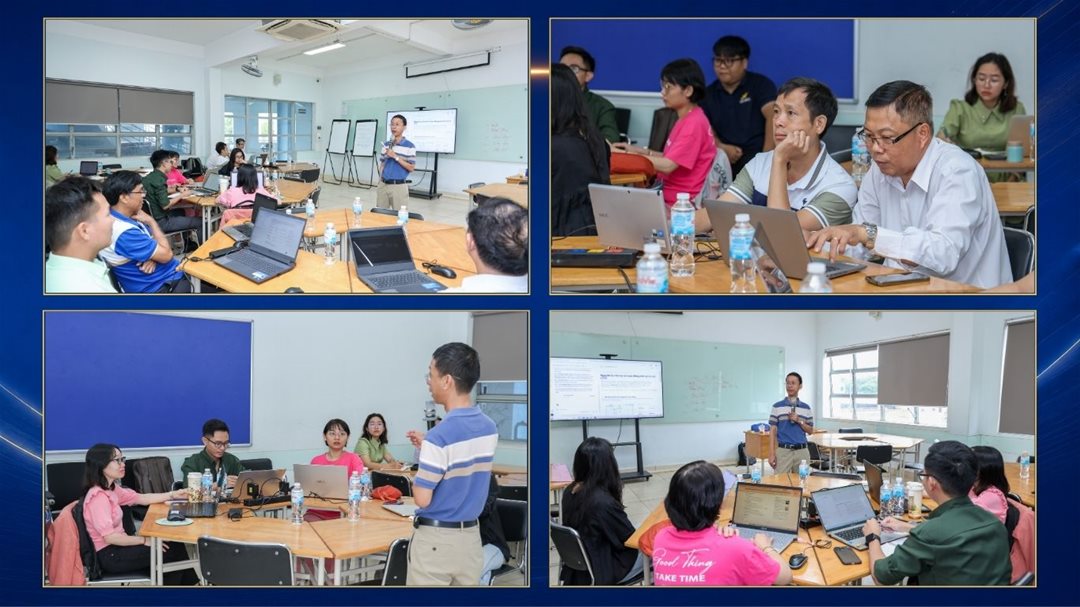
to design learning activities and develop teaching materials.
Rather than simply familiarising participants with artificial intelligence tools, the course focused on how technology can be used purposefully to support pedagogical goals. Starting from intended learning outcomes and the competencies students are expected to develop, faculty members explored how AI can support the design of learning activities, development of teaching materials, classroom interaction, and continuous improvement of the teaching and learning process — rather than being adopted simply for technology’s sake.
During the first session, Assoc. Prof. Dr. Le Phuong Truong, Head of the Office of Educational Testing and Quality Assurance, guided participants in using ChatGPT, Google AI Studio and Canva to generate ideas and develop scenarios, questions, interactive exercises and simulations. The hands-on activities were closely linked to learning objectives, helping faculty members translate subject knowledge into learning tasks designed to encourage students to participate, think critically and respond actively. AI was positioned as a tool for streamlining selected stages of lesson preparation, while faculty members remained responsible for evaluating content, ensuring its appropriateness and deciding how it should be used in the classroom.
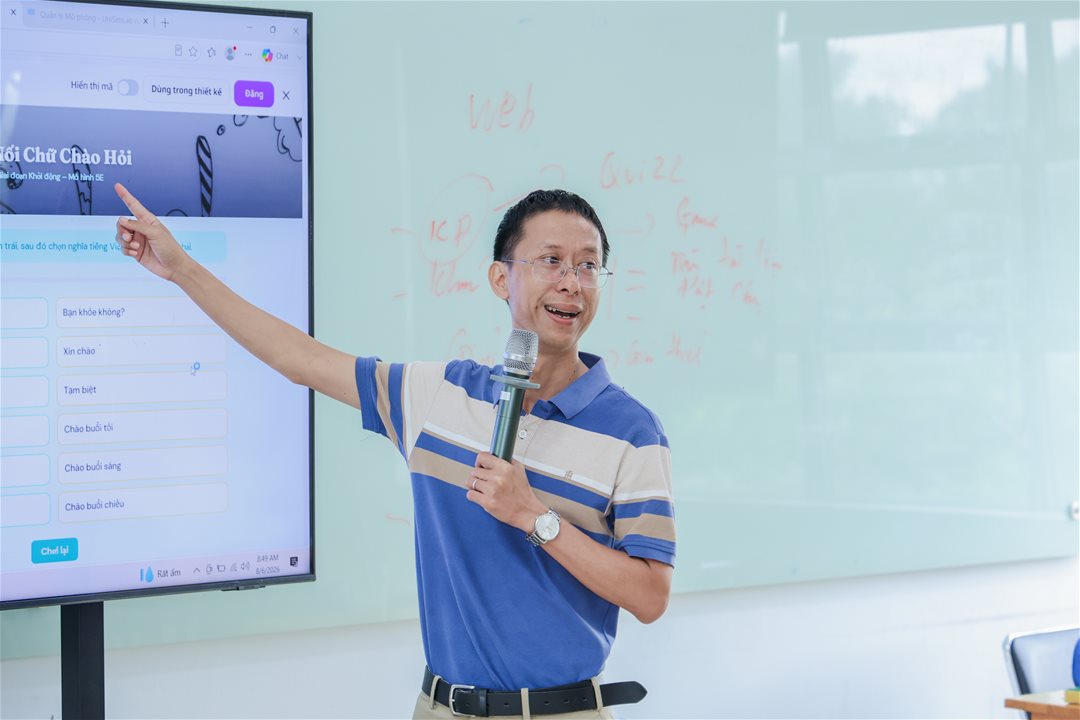
guides faculty members in using ChatGPT, Google AI Studio and Canva
to design interactive and simulation-based teaching and learning activities.
Building on the first session, the second session, led by MA Dang Thi, Deputy Dean of the Faculty of English Language, explored the use of Gemini and Canva to organise content, structure lessons, and create visual materials including graphics, infographics, presentation slides and other forms of visual learning resources.
Through this process, ideas and activities developed in the earlier stage were further transformed into practical teaching products aligned with learning objectives, subject content and approaches to organising student learning.
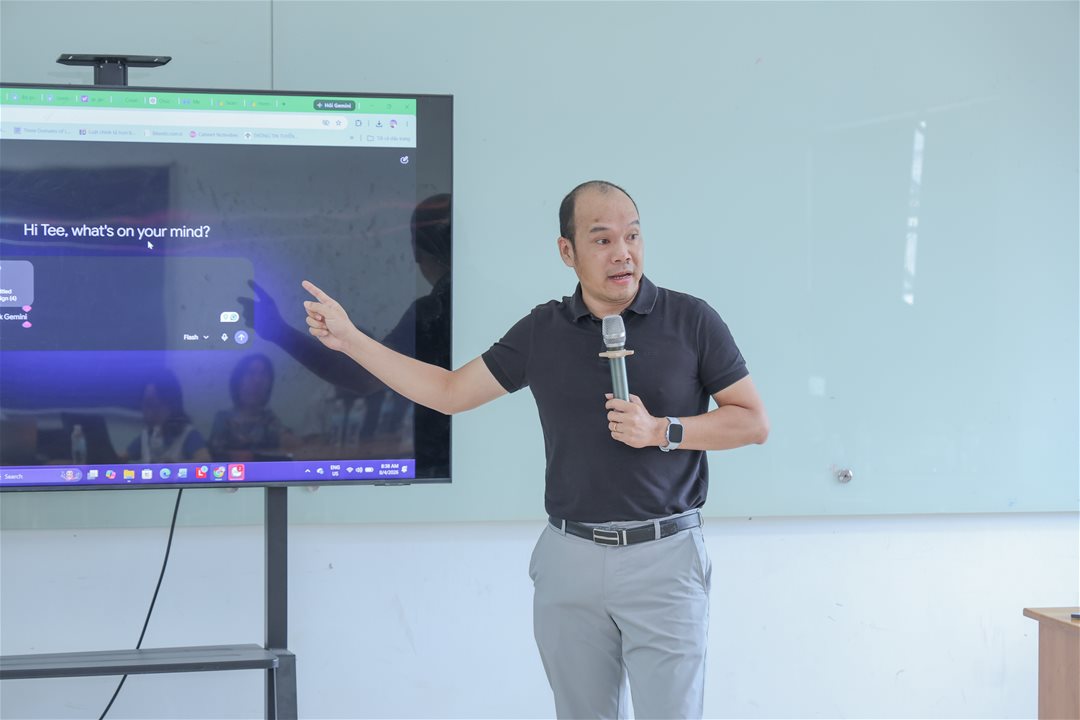
guides faculty members in using Gemini and Canva to design effective lessons.
Following the course, faculty members gained a stronger foundation for selecting appropriate tools for different teaching tasks, from lesson planning and question development to the creation of learning materials, scenarios, simulations and visualised content.
More importantly, the course emphasised that the use of artificial intelligence must go hand in hand with information verification, accuracy, academic integrity, privacy protection and the professional responsibility of educators.
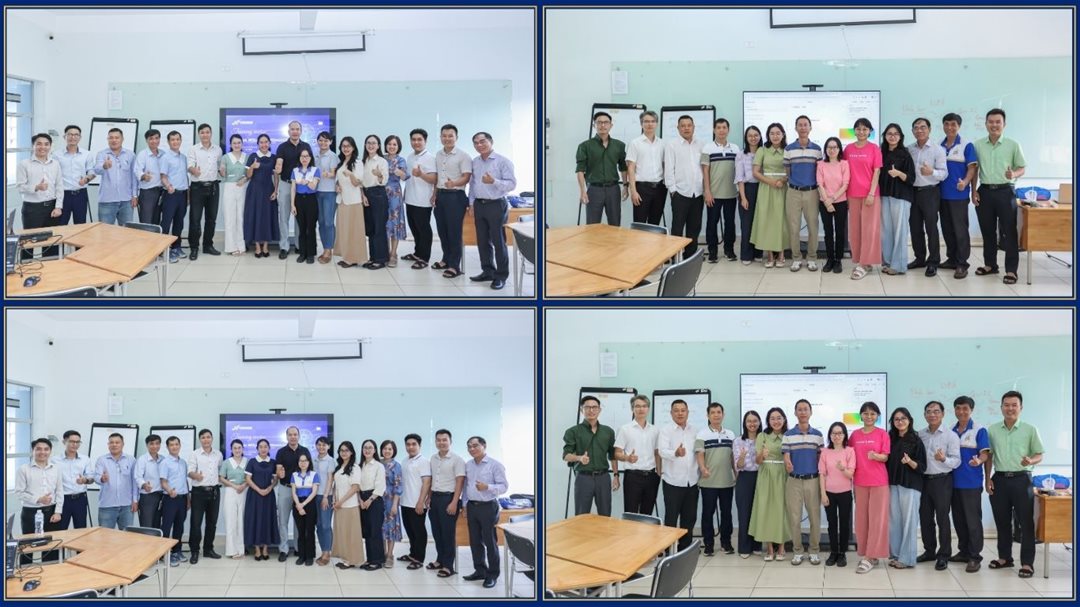
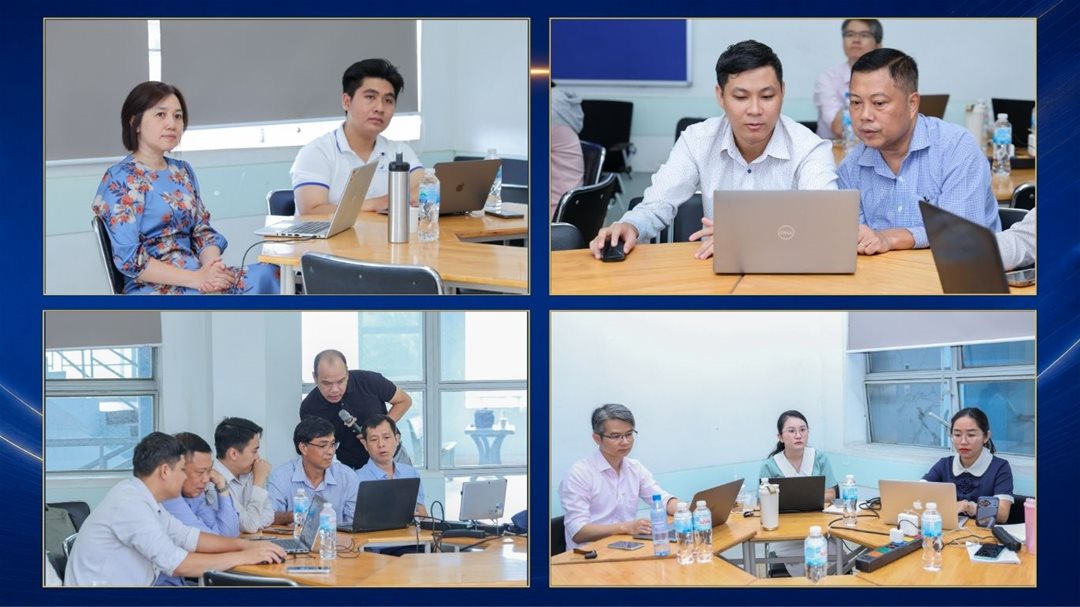
at Lac Hong University.
Post-course feedback showed that 93% of participating faculty members rated the programme positively. The figure suggests that the training was highly relevant to their practical professional development needs, while also highlighting growing demand for more advanced training in the application of artificial intelligence to teaching.
Most participants also expressed interest in joining future specialised programmes, pointing to opportunities for the University to develop more targeted training courses tailored to specific disciplines, teaching methodologies and efforts to enhance the student learning experience.
AI application # Training course # professional development # teaching
